

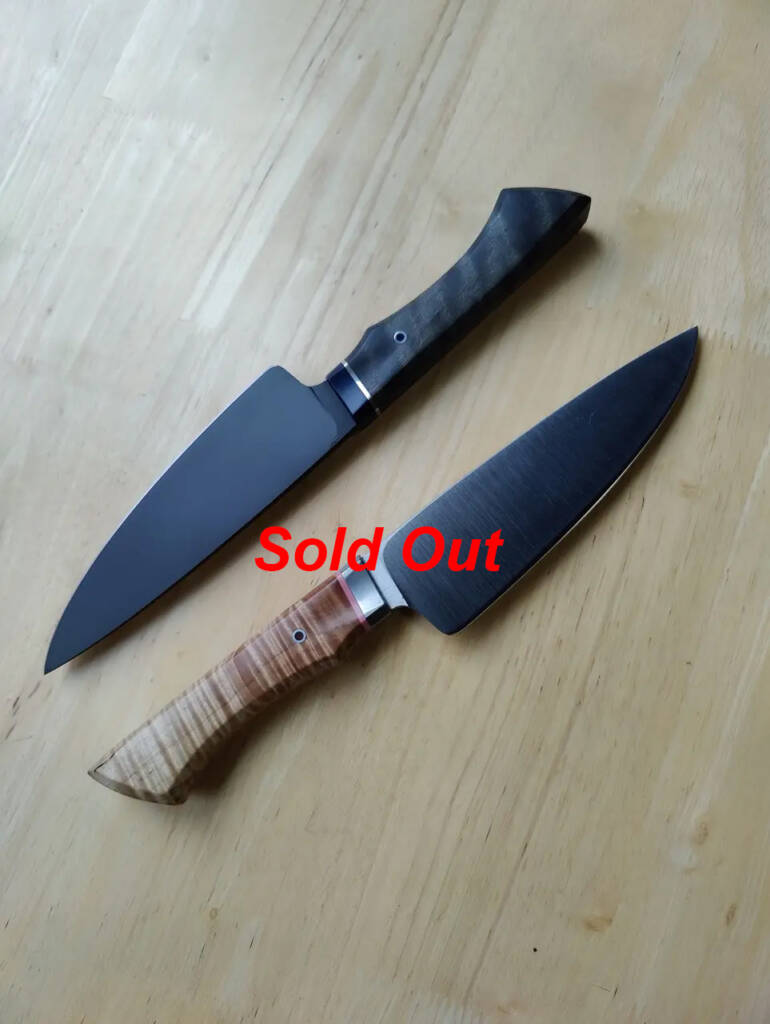
In this class, students will create a 6-7" European-style chef knife. Starting with a section of flat 1080 steel bar, the class will cover forging, grinding, heat treatment, handle fitment and finishing techniques. Students will leave with a finished, hidden tang blade ready to take home and prep a meal. There will be opportunities for additional forging as time allows. Beginner blacksmithing experience is strongly recommended but not required.
Course fee: $500
Materials fee: $50
Class size limited to 6
Zach is a welder by trade with experience in a wide range of industries. Based in rural NY, he is an ABS bladesmith who creates custom, heirloom-quality, hand forged kitchen cutlery and edged tools. He strives to blend traditional and modern techniques and materials to create quality tools to be used for decades in the kitchen. After teaching welding for Monroe Community College and at the Arc + Flame Center for seven years, Zach now runs his own company where, in addition to blades, he manufactures tooling and machines for blacksmiths and metalworkers. He is passionate about collaborating with other local artisans, makers, and tradespeople. In his classes, Zach seeks to inspire students by sharing the functional artistry of modern bladesmithing.
https://tarbellindustries.com/

Wood hand planes are a joy to use, and once you know the steps to make them, you will be able to make planes in any shape and size, including curved bottom planes. In this weekend workshop students will construct a classic smoothing plane with a 1¾" iron, and it may become your new favorite hand tool. Tim was a student of Jim Krenov in the 1980s and learned directly from him how to create “the cabinetmaker’s Stradivarius”, as Krenov referred to the handmade plane.
Class fee: $350
Materials fee: $100
Class size limited to 10

Tim Coleman creates custom furniture in a shop he built a few paces from his home in rural Western Massachusetts. He has been creating furniture for clients and exhibition for more than 35 years after studying at the College of the Redwoods with James Krenov in the 1980s. Tim is known for his graceful and dynamic furniture forms which often feature richly patterned and textured surfaces. Using low-relief carving, marquetry, embossing, and thick veneer tiles, he has developed simple but innovative techniques that put a new spin on traditional embellishment. As passionate as Coleman is about his own work, he is equally excited to pass on his knowledge as a frequent contributor to Fine Woodworking Magazine and by teaching at schools throughout the US.
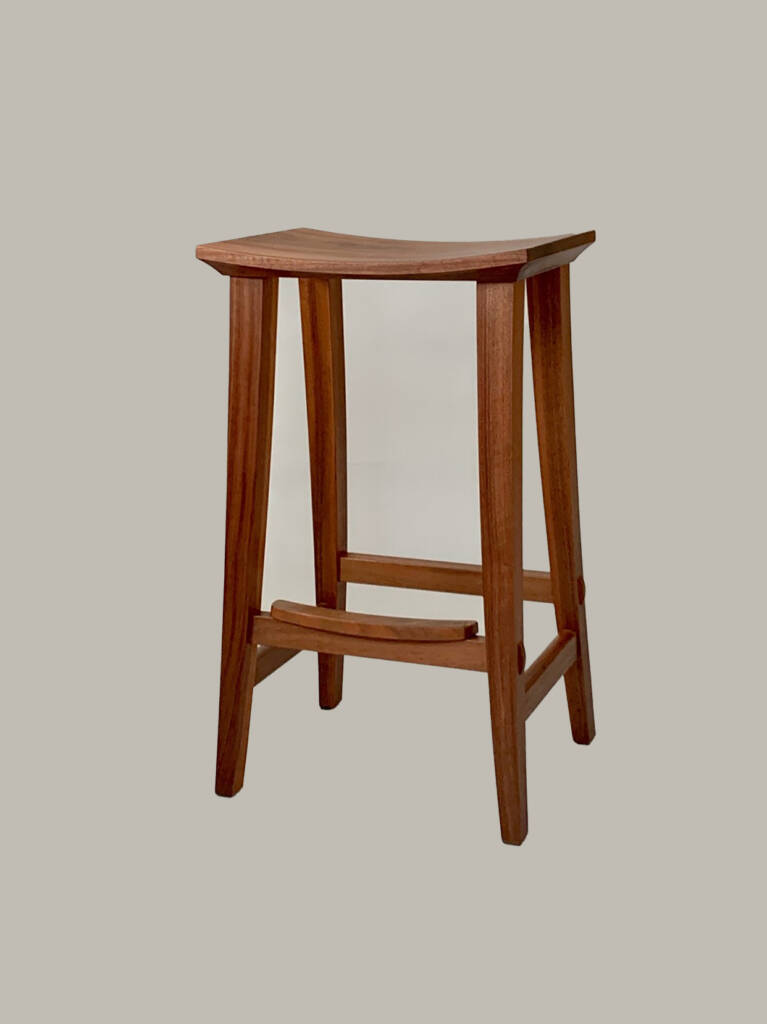
This stool is featured in issue 322 of Fine Woodworking magazine.
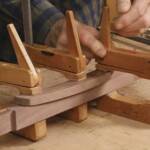
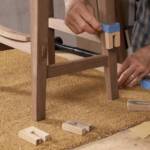
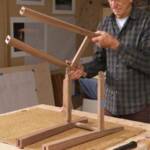
In this 5-day workshop, students will learn to build a contemporary counter stool that combines precise machine work for the legs and stretchers with a hand-shaped seat and footrest. Featured in issue 322 of Fine Woodworking magazine, this shapely stool is a great project to learn mortise and tenon joints, both through tenons and floating tenons to connect the legs to the solid wood seat. Students will have lots of practice with the band saw to cut the legs, seat and footrest, and will also gain experience with a hollow chisel and slot mortiser. The seat is shaped with a compass plane, and students will use carving gouges and round bottom planes to shape the cove under the seat. Tim will provide a detailed, measured drawing for each student and jigs to aid in the making.
Class fee: $900
Materials fee: $75
Class size limited to 10
Tim Coleman creates custom furniture in a shop he built a few paces from his home in rural Western Massachusetts. He has been creating furniture for clients and exhibition for more than 35 years after studying at the College of the Redwoods with James Krenov in the 1980s. Tim is known for his graceful and dynamic furniture forms which often feature richly patterned and textured surfaces. Using low-relief carving, marquetry, embossing, and thick veneer tiles, he has developed simple but innovative techniques that put a new spin on traditional embellishment. As passionate as Coleman is about his own work, he is equally excited to pass on his knowledge as a frequent contributor to Fine Woodworking Magazine and by teaching at schools throughout the US.
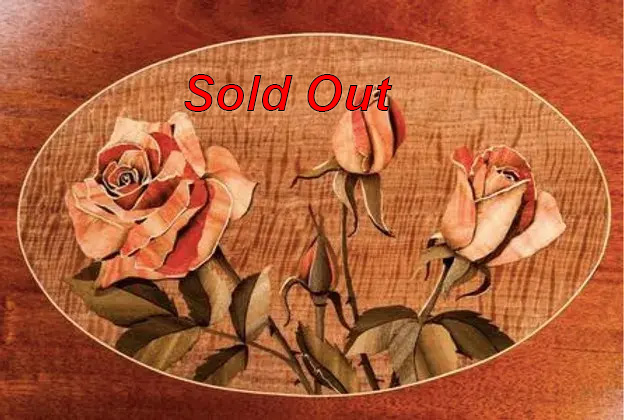
Marquetry is the delicate art of creating intricate images, decorative elements, and lettering by cutting and fitting together different wood species. Originating during the Italian Renaissance, marquetry has adorned furniture, church pews, and grand panels in homes and palaces for centuries. Over time, its techniques and styles evolved as the craft spread worldwide.
In this two-day introductory class, Frank will guide you through his favorite marquetry techniques, including packet cutting and double-bevel sawing, revealing that anyone can bring this timeless art to life. You’ll learn how to select and prepare veneers, use essential tools, and practice foundational skills. Starting with simple designs, you’ll then explore reproducing historical paterae—classic motifs found on 18th and 19th-century furniture. Along the way, you’ll master sawing methods and ancient techniques like sand shading to achieve depth and a three-dimensional effect.
The course culminates in double-bevel cutting, where you’ll practice precision techniques for creating flawless lettering with no visible gaps. Join us for a journey into the rich tradition of marquetry and discover how to bring beautiful, wood-crafted artistry into your work.
Class fee: $385
Materials fee: $50
Class size limited to 10


Frank Strazza is a master traditional fine furniture maker with over 30 years of experience, based in Central Texas. His woodworking journey began at the tender age of 11. After graduating, Frank served many years as an apprentice honing his craft under the tutelage of renowned artisan Paul Sellers. Frank's work has been showcased in local and national publications and is part of the White House's permanent collection. His masterpieces have garnered multiple top awards in nationally recognized furniture shows, including Best of Show and People's Choice. He has been building furniture for over 25 years and his work has been featured in both local and national publications, including Woodworker West, Woodwork Magazine, and Fine Woodworking.
A passionate educator, Frank travels across the country imparting the timeless skills of hand tool woodworking to eager students. His diverse interests span Windsor chair making, intricate inlay, violin crafting, and the art of marquetry. When he's not in the shop, Frank can be found cycling, and making music on the mandolin and cello.
http://www.strazzafurniture.com/

In this immersive class, students will gain a strong foundation in traditional hand-tool woodworking, learning core joinery techniques that have stood the test of time. Led by Frank Strazza, who brings over 30 years of experience and knowledge from his own traditional apprenticeship, this class is an ideal opportunity to build lasting skills. Instead of focusing on completing a project, students will practice fundamental techniques, developing a deeper understanding of woodworking essentials that can be applied to future projects with confidence and precision.
You’ll learn to work with essential hand tools—saws, planes, chisels, and scrapers—while discovering the methods to keep them sharp and effective. You’ll hand-cut a variety of classic joints, including dados, dovetails, and mortise and tenon joints, each skill building upon the last. By starting with a rough board, you’ll also learn to four-square it entirely by hand, gaining hands-on experience in planing and working the wood from its raw state. Toward the end of the week, you’ll have the chance to use your new skills to begin creating a simple dovetailed box, blending all of the techniques you’ve learned. The emphasis is on technique rather than rushing to finish a project, giving you a solid grasp of joinery fundamentals.
Key Techniques Covered
Joinery Fundamentals:
- Hand-cut dados
- Dovetails (through and half-blind)
- Mortise and tenons, including through mortises
Tool Mastery:
- Adjusting and using essential hand tools, including saws, planes, chisels, and scrapers
- Sharpening chisels, saws, scrapers, and planes to keep them at peak performance
- Four-Squaring a Board:
- Learning to plane a rough board to a fully four-squared state
Course Takeaways
By the end of the class, you’ll have the confidence to hand-cut various joinery types, tune and use hand planes to their fullest, and apply sharpening techniques to keep your tools in top condition. This course gives you a solid foundation in joinery, allowing you to approach future woodworking projects with skill and confidence.
Class fee: $900
Materials fee: $25
Class size limited to 10

Frank Strazza is a master traditional fine furniture maker with over 30 years of experience, based in Central Texas. His woodworking journey began at the tender age of 11. After graduating, Frank served many years as an apprentice honing his craft under the tutelage of renowned artisan Paul Sellers. Frank's work has been showcased in local and national publications and is part of the White House's permanent collection. His masterpieces have garnered multiple top awards in nationally recognized furniture shows, including Best of Show and People's Choice. He has been building furniture for over 25 years and his work has been featured in both local and national publications, including Woodworker West, Woodwork Magazine, and Fine Woodworking.
A passionate educator, Frank travels across the country imparting the timeless skills of hand tool woodworking to eager students. His diverse interests span Windsor chair making, intricate inlay, violin crafting, and the art of marquetry. When he's not in the shop, Frank can be found cycling, and making music on the mandolin and cello.
http://www.strazzafurniture.com/
Start your year off right with something new! We won’t be drinking but things will get hot and sweaty while we Bang in the New Year!
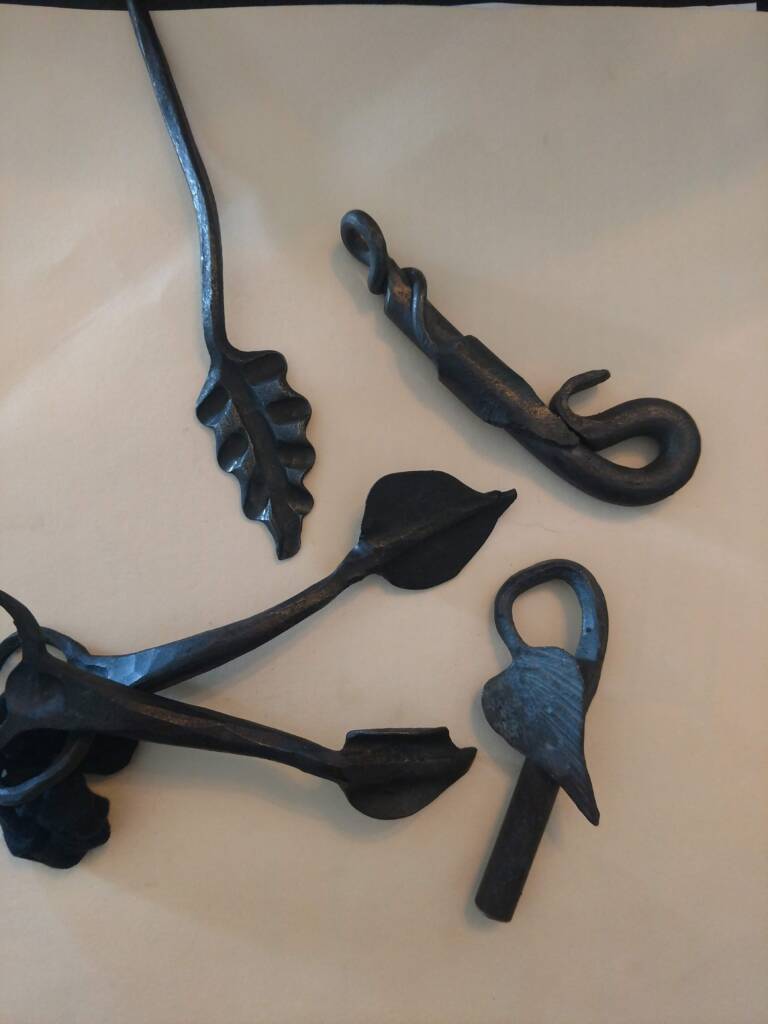
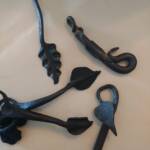
This class is limited to 6 students. Experience what it's like to work hot steel. Students will learn to create a leaf. Focus will be on the fundamentals of hammer control to get the steel to respond the way we want it to. The class will go over the basic operations of isolating material, forming, and finally texturing with the anvil and hammer to give the leaf life.
This class is an excellent way to get a taste of forging. Candy will use a combination of demonstrations and hands-on instruction to enhance your learning experience.
This class is limited to 6 students, is from 8 PM to Midnight on January 31st.
Candace started blacksmithing in 2006 and has explored many aspects of working metal. Through her explorations she has developed a strong belief that regardless of what you create a strong foundation in the basic, fundamental techniques is critical. All her classes incorporate this focus on developing strong foundational skills.
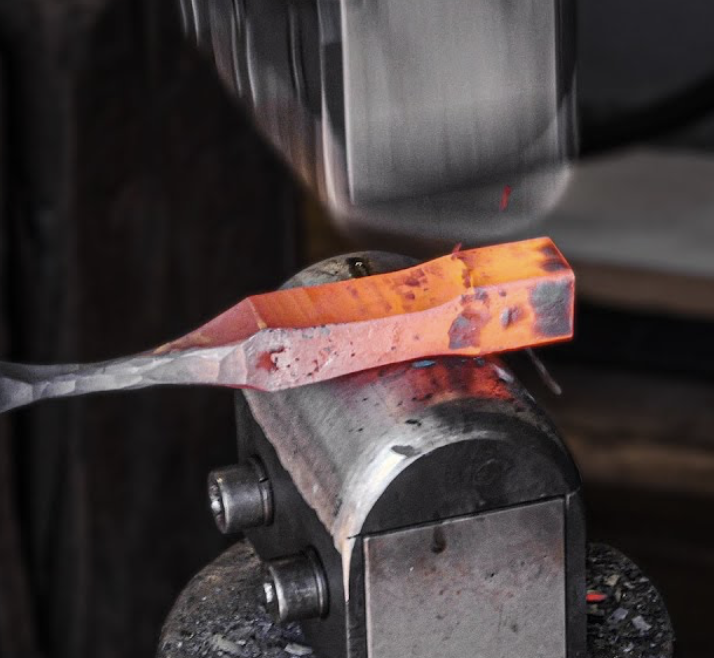
This two-day workshop introduces students to the safe and effective use of the power hammer for forging steel.
Students will learn how the machine works and how to control hot material beneath the dies. Demonstrations will cover drawing out, tapering, spreading, isolating mass and creating texture. The class will also address forging temperature, work holding, body position and basic tooling.
Students will practice moving between the power hammer and the anvil as they complete a series of structured exercises. The goal is to build confidence with the machine and develop skills that can support future sculptural, functional or toolmaking projects.
Prior blacksmithing experience is helpful but not required.
Students Should Bring
● Leather steel toe boots or safety-toe boots
● Long natural-fiber pants
● Long-sleeved natural-fiber shirt
● Notebook or sketchbook
● Reusable water bottle
Annalisa Barron is an interdisciplinary artist based in New York City and Rochester, NY. She graduated from Penn State University with a BFA in painting and drawing in 2013 and with an MFA in sculpture from the Pratt Institute in 2017. Her work has been exhibited at the Cooper Union, University of Rochester, Southern Oregon University, BunkerPROJECTS Gallery (Pittsburgh, PA), U.S. Embassy in Nicaragua, NO/GLOSS film festival (UK), and the Anthology Film Archives (NYC). The Kingdom of Back (2017) was featured in Berlin, Germany, as part of GRRL HAUS Cinema’s 2018 European tour. She served as a panelist for the 2020 NYFA Craft and Sculpture Fellowships and is a recipient of NYSCA’s 2021 DEC Regrant Program/Individual Artist Grant. She has received support from the New York Foundation for the Arts, the New York Film and Video Council, the AAUW, the New York State Inspire Grant, Penn State University, and the Simmons-Jansma Project Renew Grant. Currently, Annalisa teaches in the College of Art and Design at the Rochester Institute of Technology.
http://www.annalisabarron.com
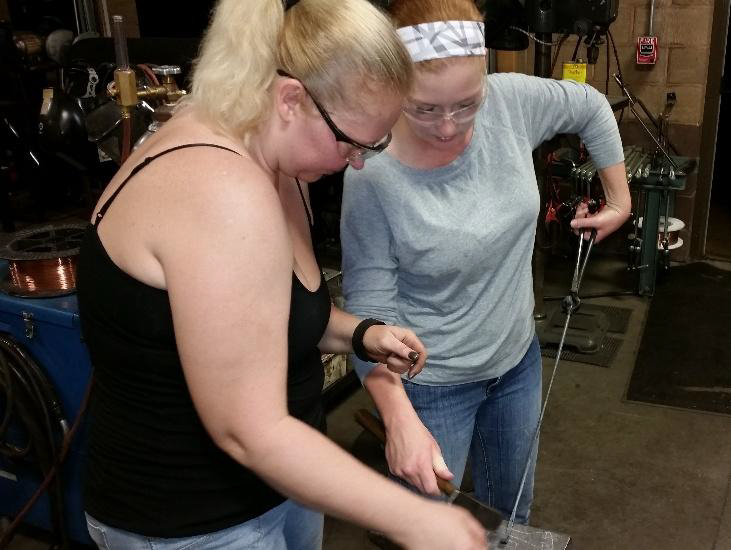
Experience what it's like to work hot steel in an open and welcoming way. Students will learn the fundamentals of blacksmithing.
Topics will include operation of gas forges; learning about efficient hammer technique; tapering metal; scrolling and bending; and many other topics. Note this class is not a project-based class, so while you may leave with many samples you may not end up with a completed project.
The focus of this class is on building comfort with equipment and developing forging skills. Candy will use a combination of demonstrations and hands-on instruction to enhance your learning experience.
Class will make use of hammers, forges, vises and various other tools found in a smithy.
This class is limited to 6 students.
Who Should Take this class:
This class is open to women of all experience levels. Class will make use of hammers, forges, vises and various other tools found in a smithy.
Candace started blacksmithing in 2006 and has explored many aspects of working metal. Through her explorations she has developed a strong belief that regardless of what you create a strong foundation in the basic, fundamental techniques is critical. All her classes incorporate this focus on developing strong foundational skills.
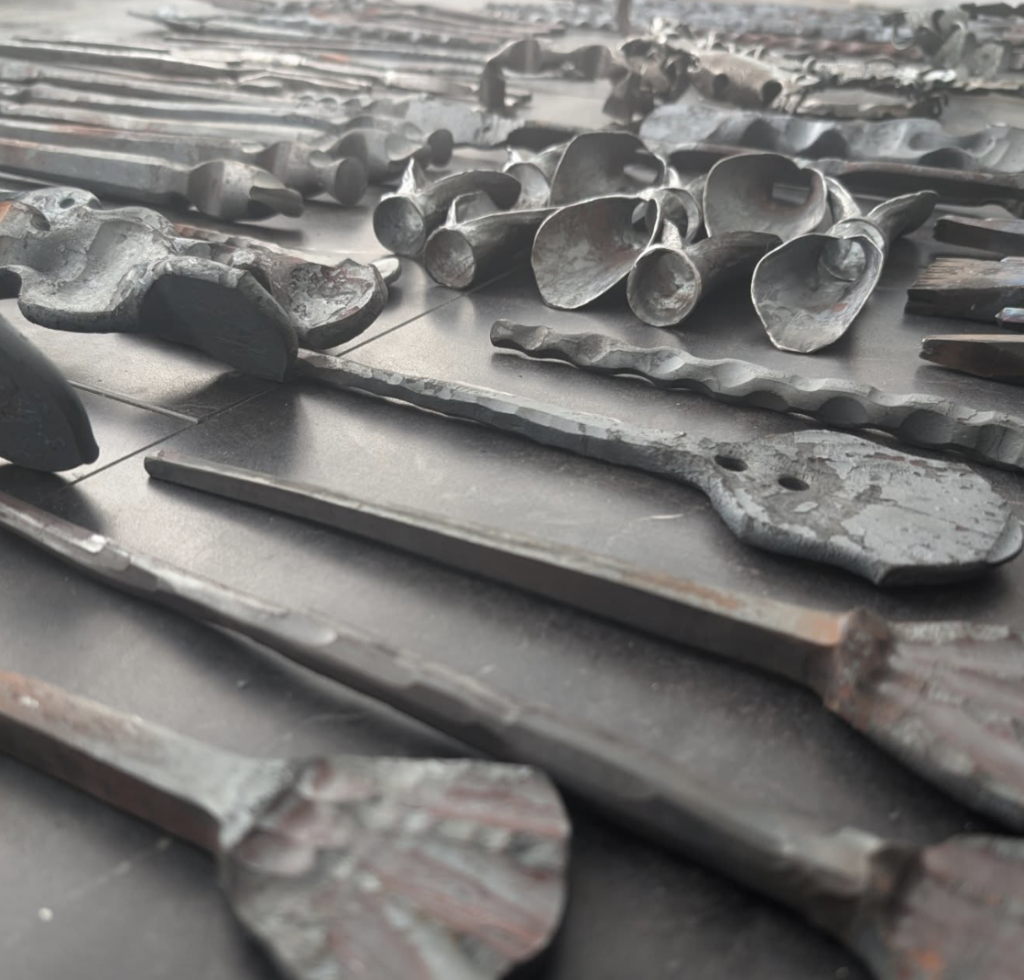
This three-day workshop introduces forging as a way to develop sculptural form. Students will begin with basic techniques such as drawing, tapering, bending, twisting and spreading. They will then use these processes to create small studies in steel.
Demonstrations will include hand forging, power hammer use, cutting, grinding, fitting and basic joining. Sketching and quick physical studies will help students test ideas before committing to a finished form.
The emphasis is on experimentation and on learning how the behavior of hot steel can influence design decisions. Students will leave with forged samples, sculptural studies and a stronger foundation for using blacksmithing processes in their own creative work.
No previous forging experience is required.
Students Should Bring
● Leather steel toe boots or safety-toe boots
● Long natural-fiber pants
● Long-sleeved natural-fiber shirt
● Sketchbook and pencils
● Reusable water bottle
● Packing materials for finished work
Annalisa Barron is an interdisciplinary artist based in New York City and Rochester, NY. She graduated from Penn State University with a BFA in painting and drawing in 2013 and with an MFA in sculpture from the Pratt Institute in 2017. Her work has been exhibited at the Cooper Union, University of Rochester, Southern Oregon University, BunkerPROJECTS Gallery (Pittsburgh, PA), U.S. Embassy in Nicaragua, NO/GLOSS film festival (UK), and the Anthology Film Archives (NYC). The Kingdom of Back (2017) was featured in Berlin, Germany, as part of GRRL HAUS Cinema’s 2018 European tour. She served as a panelist for the 2020 NYFA Craft and Sculpture Fellowships and is a recipient of NYSCA’s 2021 DEC Regrant Program/Individual Artist Grant. She has received support from the New York Foundation for the Arts, the New York Film and Video Council, the AAUW, the New York State Inspire Grant, Penn State University, and the Simmons-Jansma Project Renew Grant. Currently, Annalisa teaches in the College of Art and Design at the Rochester Institute of Technology.
http://www.annalisabarron.com
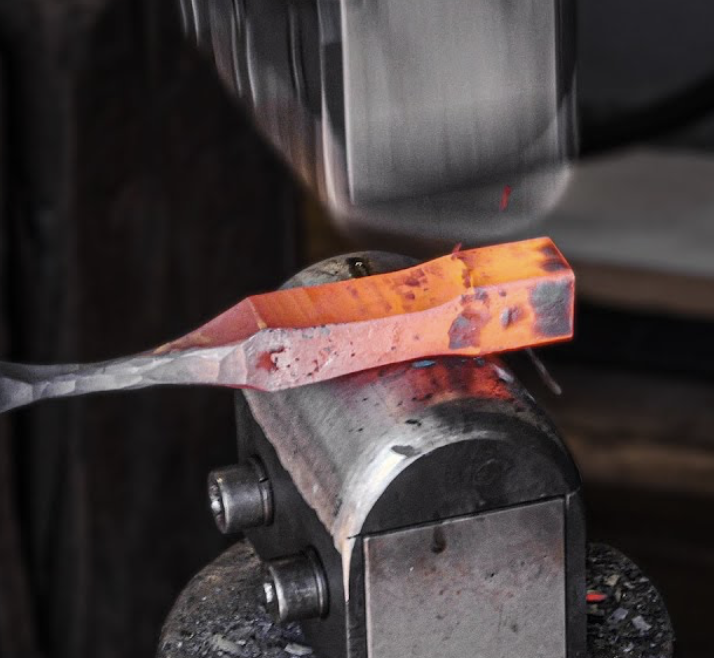
This two-day workshop introduces students to the safe and effective use of the power hammer for forging steel.
Students will learn how the machine works and how to control hot material beneath the dies. Demonstrations will cover drawing out, tapering, spreading, isolating mass and creating texture. The class will also address forging temperature, work holding, body position and basic tooling.
Students will practice moving between the power hammer and the anvil as they complete a series of structured exercises. The goal is to build confidence with the machine and develop skills that can support future sculptural, functional or toolmaking projects.
Prior blacksmithing experience is helpful but not required.
Students Should Bring
● Leather steel toe boots or safety-toe boots
● Long natural-fiber pants
● Long-sleeved natural-fiber shirt
● Notebook or sketchbook
● Reusable water bottle
Annalisa Barron is an interdisciplinary artist based in New York City and Rochester, NY. She graduated from Penn State University with a BFA in painting and drawing in 2013 and with an MFA in sculpture from the Pratt Institute in 2017. Her work has been exhibited at the Cooper Union, University of Rochester, Southern Oregon University, BunkerPROJECTS Gallery (Pittsburgh, PA), U.S. Embassy in Nicaragua, NO/GLOSS film festival (UK), and the Anthology Film Archives (NYC). The Kingdom of Back (2017) was featured in Berlin, Germany, as part of GRRL HAUS Cinema’s 2018 European tour. She served as a panelist for the 2020 NYFA Craft and Sculpture Fellowships and is a recipient of NYSCA’s 2021 DEC Regrant Program/Individual Artist Grant. She has received support from the New York Foundation for the Arts, the New York Film and Video Council, the AAUW, the New York State Inspire Grant, Penn State University, and the Simmons-Jansma Project Renew Grant. Currently, Annalisa teaches in the College of Art and Design at the Rochester Institute of Technology.
http://www.annalisabarron.com

In this weekend course furniture maker and educator, Andrew Hunter, will guide students through the process of setting up a new Japanese plane. What seems like a simple tool, a blade and a block of wood, the Japanese plane (Kanna) is actually a very complex instrument with many subtle qualities. The first challenge most woodworkers face when learning to use a Kanna is that they don’t come ready to use out of the box. You are only supplied with great ingredients, and it is up to the user to get the fit between the blade and the block just right.
Andrew will work with each student to get their new plane into working order. We will cover sharpening and shaping the blade, fitting the blade to the block and profiling its sole for optimal performance. Of course, we will also spend time using your new plane, learning to work with your whole body, not just your arms. The weekend will wrap up by putting our new planes to use with a friendly planing contest (kezurou-kai). By the conclusion of this class, each student will take home a fully operational Japanese hand plane and have the know how to keep it working correctly.
Materials will be purchased from Andrew.
The 54mm plane is currently $200. The 64mm plane is currently $310. Attendees will receive an email a week or two prior to the class to get their order for Andrew.
Student Tool List:
Students should bring sharpening stones.

Andrew is a custom furniture maker working and living in New York’s Hudson Valley. Best known for his use of traditional Japanese hand tools, Andrew demonstrates and teaches across the country. As a self-taught woodworker, he offers a unique perspective to other Americans exploring Eastern woodworking. His workshops demonstrate that by understanding the fundamental principles behind other cultures’ tools and techniques, all woodworkers can benefit. A frequent contributor to Fine Woodworking magazine, he is eager to share what he has learned in his 25-plus years of making furniture.
https://www.instagram.com/andrewhunter_furniture/
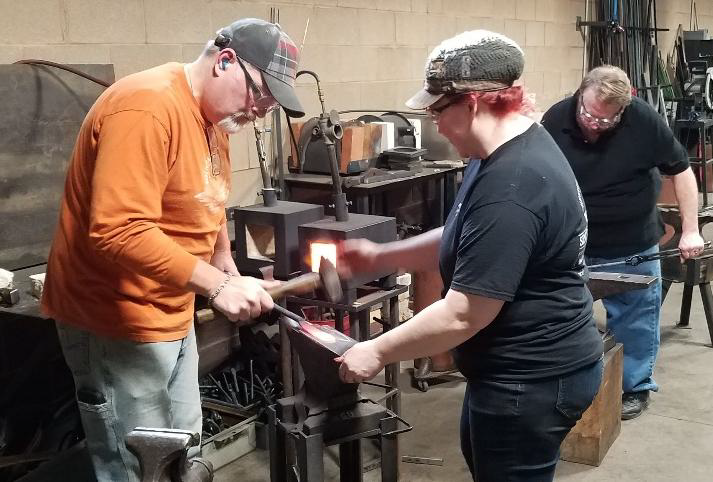
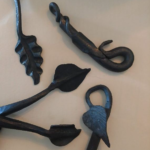
Experience what it's like to work hot steel! Students will learn the fundamentals of blacksmithing. Topics will include operation of gas forges; learning about efficient hammer technique; tapering metal; scrolling and bending; and many other topics.
Note this class is not a project-based class, so while you may leave with many samples you may not end up with a completed project. The focus of this class is on building comfort with equipment and developing forging skills.
Candy will use a combination of demonstrations and hands-on instruction to enhance your learning experience.
Who Should Take this class:
This class is open to all experience levels. Class will make use of hammers, forges, vises and various other tools found in a smithy.
Candace started blacksmithing in 2006 and has explored many aspects of working metal. Through her explorations she has developed a strong belief that regardless of what you create a strong foundation in the basic, fundamental techniques is critical. All her classes incorporate this focus on developing strong foundational skills.