



Have you ever wondered how to add curves to your cabinetry? Maybe add a few graceful lines to an otherwise plain box? Well, the coopered whiskey cabinet is one of the best skill building projects a woodworker can take on. From basic joinery skills like dadoes to more advanced frame and panel construction, this cabinet is a fantastic skill builder for all woodworkers. Adding elements such as a curved door and hand shaped edge profiles can elevate a piece—and your skill set—even further.
In this class Erik will walk you through the design and construction of a wall hanging cabinet. The class will start with the ever important discussion of grain selection—how and when to use flat sawn, quarter sawn, or bookmatched boards and how different grain orientations can affect the visual flow of a piece. From there comes joinery: housed stub tenons or floating tenons for the carcass, stopped dadoes for the shelves, and rabbets and grooves for the rear panel. A combination of simple machinery and hand tools will be employed. Discussions such as whether to employ hand planes or sanders for surface prep and routers versus hand planes for edge profiling will be had along the way. Finally, Erik will discuss his various finishing techniques and what makes the most sense in a professional shop as well as your home shop. Students will leave not only with a beautiful cabinet for their favorite whiskey, but the confidence and necessary skills to take on a project of this caliber in their own shop!
Erik will walk you through the design and construction of his textured wall hanging whiskey cabinet. The class will cover the ever important topic of grain selection and discuss what joinery is most appropriate—housed stub tenon, floating tenons, or sliding dovetails, for example—using a combination of simple machinery and hand tools. And of course we will cover how to compose and power carve a cabinet door. Finally, Erik will discuss his various finishing techniques and what makes the most sense in a professional shop as well as your home shop. Students will leave with both a beautiful cabinet for their favorite whiskey AND the confidence and necessary skills to take on a project of this caliber in their own shop!
Class fee: $900
Materials fee: $150
Class size limited to 10


Erik Curtis is an American woodworker, sculptor, and television personality. He attended the Nine-month Comprehensive at the Center for Furniture Craftsmanship in 2012 and has taught at schools around the country. His creative practice combines the sculptural with the functional in an attempt to blur the line between furniture and art. He also stars as the carpenter on Netflix’s "Instant Dream Home."
www.encurtis.com.

Japan boasts some of the oldest wooden buildings on earth. Their longevity relies on intricate joinery that not only can withstand the years of elements, but are also reversible for inevitable repairs. In this weekend class Andrew will introduce students to the secrets behind these sophisticated joints. Student will learn principles that are applicable to both furniture makers and timber framers alike.
Each participant will cut their own Kanawa scarf joint entirely by hand. This intricate joint is a perfect exercise for getting started with Japanese joinery. Students will learn how to use centerlines and story sticks to make simple work of complex layouts and how to most efficiently use their hand tools to work to these lines. Andrew will demonstrate methods for getting tight fitting joinery every time.
Students are encouraged to bring their own Japanese tools to class. Andrew will offer feedback and assistance on getting them tuned and set up to work more efficiently. If you don’t have your own collection of Japanese tools (yet), no worries, bring what you have. Andrew will have a selection tools for students to try out as well as the well stocked collection of western tools provided by the school.
Class fee: $350
Materials fee: $25
Class size limited to 10


Andrew is a custom furniture maker working and living in New York’s Hudson Valley. Best known for his use of traditional Japanese hand tools, Andrew demonstrates and teaches across the country. As a self-taught woodworker, he offers a unique perspective to other Americans exploring Eastern woodworking. His workshops demonstrate that by understanding the fundamental principles behind other cultures’ tools and techniques, all woodworkers can benefit. A frequent contributor to Fine Woodworking magazine, he is eager to share what he has learned in his 25-plus years of making furniture.
https://www.instagram.com/andrewhunter_furniture/
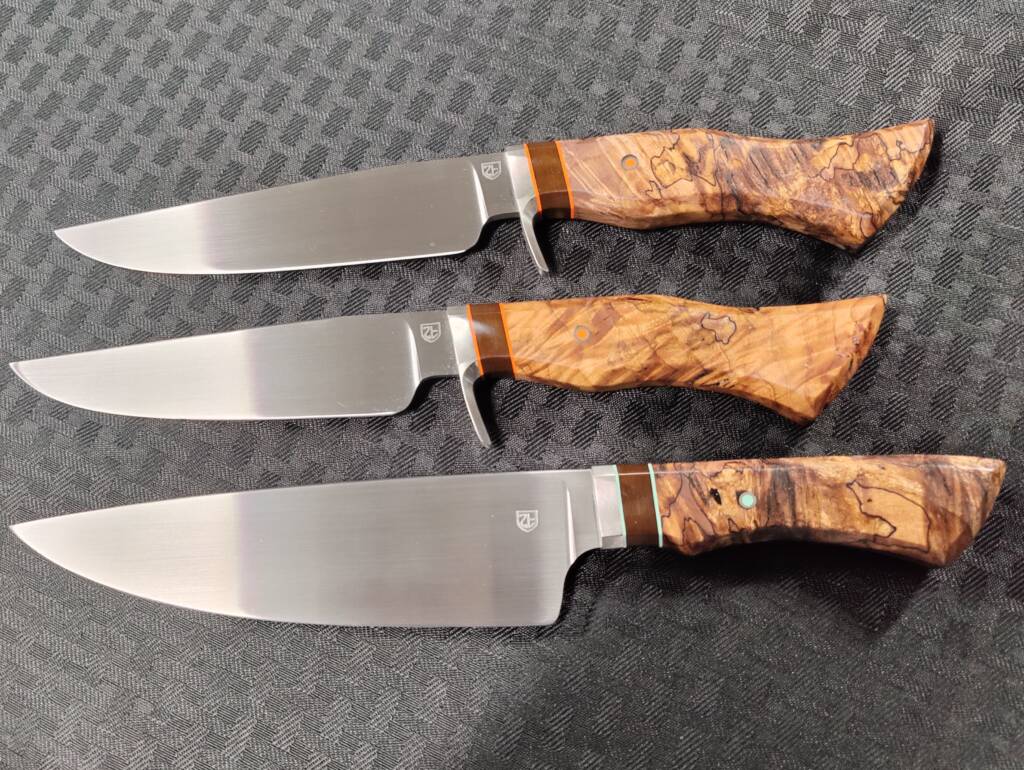
In this class, students will create a hunting knife. Starting with a section of flat 1080 steel bar, the class will cover forging, grinding, heat treatment, handle fitment and finishing techniques. Students will leave with a finished, hidden tang blade ready to take home. There will be opportunities for additional forging as time allows. Beginner blacksmithing experience is recommended but not required.
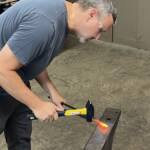
Zach is a welder by trade with experience in a wide range of industries. Based in rural NY, he is an ABS bladesmith who creates custom, heirloom-quality, hand forged kitchen cutlery and edged tools. He strives to blend traditional and modern techniques and materials to create quality tools to be used for decades in the kitchen. After teaching welding for Monroe Community College and at the Arc + Flame Center for seven years, Zach now runs his own company where, in addition to blades, he manufactures tooling and machines for blacksmiths and metalworkers. He is passionate about collaborating with other local artisans, makers, and tradespeople. In his classes, Zach seeks to inspire students by sharing the functional artistry of modern bladesmithing.
https://tarbellindustries.com/

This hands-on course introduces the fundamentals of designing and building solid wood case pieces—the essential foundation of fine furniture making. Designed for beginners with basic wood shop experience, or for intermediate woodworkers looking to sharpen their technique, this class explores both the creative and technical sides of case construction. Case pieces—such as chests, sideboards, and desks—offer unique challenges and design possibilities. Over the week, students will build a simple case piece that serves as a practical study model. Through a mix of demonstrations, guided practice, and discussion, you’ll learn to:
• Identify and compare the main types of case construction
• Design and plan a project from sketch to cut list
• Select, mill, and prepare lumber for stability and accuracy
• Explore joinery options and case assembly methods
• Make and fit drawers and doors
• Choose and install hardware
By the end of the week, you’ll have a solid understanding of how to design, plan, and build functional, elegant casework with confidence.
Materials fee: $75
Class size limited to 12

Owain Harris is a self-taught woodworker who operates a furniture studio in Gonic, NH, where he designs and builds custom furnishings for galleries and residential clients. He began his
career in wood as a framing carpenter in 1997, and worked as both a finish carpenter and remodeler before moving into the shop full-time in 2008. Owain is a juried member of the League of NH Craftsmen and the New Hampshire Furniture Masters Association, where he currently serves as Chair. His work has received multiple awards, including a Pinnacle Award from the International Society of Furniture Designers and a Veneertech Craftsman Challenge
Award. Owain has been featured in numerous publications, including Fine Woodworking and NH Home Magazine. Owain shares his passion for furniture making and design through
teaching at craft schools and institutions around the country.

Explore the art and craft of applying veneer to curved and sculpted forms. In this two-day intensive, students will learn a range of techniques through demonstrations, short lectures, and hands-on exercises designed to build both confidence and skill.
Working with a variety of tools and methods, you’ll practice:
• Hot iron hammer veneering
• Vacuum veneering for compound and simple curves
• Free-form vacuum bagging techniques
• Making and using curved cauls
• Preparing and softening veneer for bending
• Understanding and choosing the right adhesive
This class is perfect for furniture makers and woodworkers interested in expanding their veneering skills beyond flat work. Whether you’re adding subtle contours or tackling more complex shapes, you’ll leave with the knowledge and experience to approach curved surfaces with precision and creativity.
Class size limited to 12


Owain Harris is a self-taught woodworker who operates a furniture studio in Gonic, NH, where he designs and builds custom furnishings for galleries and residential clients. He began his
career in wood as a framing carpenter in 1997, and worked as both a finish carpenter and remodeler before moving into the shop full-time in 2008. Owain is a juried member of the League of NH Craftsmen and the New Hampshire Furniture Masters Association, where he currently serves as Chair. His work has received multiple awards, including a Pinnacle Award from the International Society of Furniture Designers and a Veneertech Craftsman Challenge
Award. Owain has been featured in numerous publications, including Fine Woodworking and NH Home Magazine. Owain shares his passion for furniture making and design through
teaching at craft schools and institutions around the country.

This workshop will be an intensive investigation into the design and construction of dining or desk chairs. Making a unique, comfortable, strong and attractive chair is a wonderful challenge and is considered by most to be the pinnacle of woodworking. This course will give you both the anthropometric data (critical human dimensions) required to design comfortable chairs and a simple and effective step by step approach to successfully building chairs even if they incorporate compound curved members and seemingly complex joinery. Participants will develop their own chair design with Michael’s guidance during the class and will then fabricate a full size mock up that can be sat in and evaluated.
The history of chairs will be covered in a slide presentation. Demonstrations on how to make scale models, full size mock ups and jig making for chairs will take place throughout the week. Straightforward methods of upholstering chair seats and backs will be also be covered. Michael will bring examples of several chairs that he has made and will discuss what inspired the designs and how he employs an organized sequence of jigs to fabricate his chairs. The "Getting to Know Your Bandsaw" class on August 15 and the "Using Jigs to Advance Your Woodworking Skills" class on August 16 are ideal classes to take in addition to this 5-day class.
Class fee: $950
Materials fee: $100
Class size limited to 10


Canadian designer/maker, teacher and mentor Michael C. Fortune has become acclaimed for his innovative, but resolved, designs for one-of-a-kind objects in wood, commissioned residential furnishings, and items in limited editions. He is acknowledged for both his technical and design expertise, giving lectures and workshops across Canada, United States, New Zealand, Australia, and Brazil. Michael's work has appeared in numerous exhibitions worldwide and he has taught at many schools and craft centers including; Sheridan College School of Crafts and Design, Ryerson Polytechnical Institute, the Rochester Institute of Technology NY, Worcester Center for Crafts in Massachusetts, Anderson Arts Center, Colorado, Savannah College of Art and Design, Australian National University School of Art, and the Marc Adams School in Indiana where the fellowship program for advanced students has been named in his honor. Michael is the senior mentor for the Artist in Residence program (2018, 2020) at the Centre for Fine Woodworking in New Zealand.
Fortune’s international career includes consulting for Trinidad and Tobago's Commonwealth Fund for Technical Assistance, working for sustainable source timber in Mexico aimed at supplying the expanding hotel industry within the country, and volunteering for Woodlinks, a joint Canadian/U.S. not-for-profit organization dedicated to revitalizing vocational training in secondary schools throughout North America. Michael is also assisting a new school in Puerto Rico that promotes use of timber salvaged after destructive hurricanes.
In 1993, Michael was the first woodworker to receive the prestigious Prix Saidye Bronfman, Canada’s highest award in the crafts, and in 2007 he was the first Canadian to receive the Award of Distinction from the Furniture Society. He received the Mather Award in 2019 for his contribution to craft in Ontario. Michael Fortune has a clear vision of how fine craft can positively effect the culture and economy of Canada and the world beyond.
http://www.michaelfortune.com/

Creating shapes or joints in wood that are not flat and straight may seem daunting and beyond what you are comfortable with. There’s a surprisingly simple solution: build a custom support, often called a jig, that puts the piece in a “square” reference so your machine or hand tool can accommodate the irregular form. The next step may be clamping and assembling the shapes and joints. We’ll show you how to identify what’s needed to apply perfect pressure and how to fabricate clamping cauls, both specialized and cauls used repeatedly. This class will open new design and construction vistas.
Topics covered:
- Learn how to choose the correct hand tool or machine for the task at hand
- Tools and materials for making jigs, both shop made and purchased
- How to secure parts in jigs for one-off or repetitive operations
- Build a collection of reusable clamping cauls that will simplify assembling irregular shapes
- How to analyze the direction for perfect clamping pressure
- How to upgrade quick jigs so they last and last
This class will be limited to 12 students and will largely be demonstrations; however, feel free to bring a project idea and Michael can help you problem solve the fabrication.

Canadian designer/maker, teacher and mentor Michael C. Fortune has become acclaimed for his innovative, but resolved, designs for one-of-a-kind objects in wood, commissioned residential furnishings, and items in limited editions. He is acknowledged for both his technical and design expertise, giving lectures and workshops across Canada, United States, New Zealand, Australia, and Brazil. Michael's work has appeared in numerous exhibitions worldwide and he has taught at many schools and craft centers including; Sheridan College School of Crafts and Design, Ryerson Polytechnical Institute, the Rochester Institute of Technology NY, Worcester Center for Crafts in Massachusetts, Anderson Arts Center, Colorado, Savannah College of Art and Design, Australian National University School of Art, and the Marc Adams School in Indiana where the fellowship program for advanced students has been named in his honor. Michael is the senior mentor for the Artist in Residence program (2018, 2020) at the Centre for Fine Woodworking in New Zealand.
Fortune’s international career includes consulting for Trinidad and Tobago's Commonwealth Fund for Technical Assistance, working for sustainable source timber in Mexico aimed at supplying the expanding hotel industry within the country, and volunteering for Woodlinks, a joint Canadian/U.S. not-for-profit organization dedicated to revitalizing vocational training in secondary schools throughout North America. Michael is also assisting a new school in Puerto Rico that promotes use of timber salvaged after destructive hurricanes.
In 1993, Michael was the first woodworker to receive the prestigious Prix Saidye Bronfman, Canada’s highest award in the crafts, and in 2007 he was the first Canadian to receive the Award of Distinction from the Furniture Society. He received the Mather Award in 2019 for his contribution to craft in Ontario. Michael Fortune has a clear vision of how fine craft can positively effect the culture and economy of Canada and the world beyond.
http://www.michaelfortune.com/

The bandsaw can be one of the most versatile, accurate and safe machines in your workshop—providing it is set up and used properly. A new or even a well used bandsaw with a ½ HP motor can be tuned to cut precision joints or resaw flawlessly without purchasing aftermarket accessories or expensive blades. Installing new tires, selecting and setting blade tension, tracking, cutting curves and resawing will be covered. A variety of useful jigs designed to be used with the bandsaw will be demonstrated. Illustrations will be provided so you can make your own. Michael operates one of the most diversely equipped workshops in North America. It includes three industrial table saws but he can’t remember the last time he ripped a piece of wood on a table saw. Instead, he prefers to use a vintage 15” General Mfg. bandsaw. He bought this bandsaw in 1974, tracked the blade once with only modest tension, installed a factory fence parallel to the miter slot and has not had to adjust it in 50 years. That is one of nine bandsaws in his workshop. Let the bandsaw master show you how to make this simple machine the most versatile in your workshop. This class will be limited to 12 students; while mostly demonstration, the class size will allow for some student hands on.

Canadian designer/maker, teacher and mentor Michael C. Fortune has become acclaimed for his innovative, but resolved, designs for one-of-a-kind objects in wood, commissioned residential furnishings, and items in limited editions. He is acknowledged for both his technical and design expertise, giving lectures and workshops across Canada, United States, New Zealand, Australia, and Brazil. Michael's work has appeared in numerous exhibitions worldwide and he has taught at many schools and craft centers including; Sheridan College School of Crafts and Design, Ryerson Polytechnical Institute, the Rochester Institute of Technology NY, Worcester Center for Crafts in Massachusetts, Anderson Arts Center, Colorado, Savannah College of Art and Design, Australian National University School of Art, and the Marc Adams School in Indiana where the fellowship program for advanced students has been named in his honor. Michael is the senior mentor for the Artist in Residence program (2018, 2020) at the Centre for Fine Woodworking in New Zealand.
Fortune’s international career includes consulting for Trinidad and Tobago's Commonwealth Fund for Technical Assistance, working for sustainable source timber in Mexico aimed at supplying the expanding hotel industry within the country, and volunteering for Woodlinks, a joint Canadian/U.S. not-for-profit organization dedicated to revitalizing vocational training in secondary schools throughout North America. Michael is also assisting a new school in Puerto Rico that promotes use of timber salvaged after destructive hurricanes.
In 1993, Michael was the first woodworker to receive the prestigious Prix Saidye Bronfman, Canada’s highest award in the crafts, and in 2007 he was the first Canadian to receive the Award of Distinction from the Furniture Society. He received the Mather Award in 2019 for his contribution to craft in Ontario. Michael Fortune has a clear vision of how fine craft can positively effect the culture and economy of Canada and the world beyond.
http://www.michaelfortune.com/

Chasing is the art of using specialized hammers, punches, and chisels to emboss images into the surface of metal. From simple to complex, adding chased elements to a metal's surface softens and dignifies its appearance. This class will introduce you to the various tools and techniques to create images and patterns on any metal. You'll use these techniques to create a one of kind Reuleaux triangular vessel that can be used as a planter, vase, pencil holder or be an objet d'art on its own. A Reuleaux triangle is a curved triangular shape that has a constant width like a circle has, leading to a pleasing shape both visually and tactilely. Reuleaux polygons have endless uses in architecture and machine design. Other topics covered include annealing, work hardening, patination, and silver soldering.
This class is open a to all experience levels. Students with a meticulous eye for detail will love this class.
Student tips: Bring your glasses or best magnifying readers. Your noise cancelling earbuds or headphones can make many simultaneous hammers more pleasant.
Class will make use of hand tools, torches, and mild chemicals for cleaning and patination.
Class fee: $275
Materials fee: $75
Class size limited to 6


Brian took his first blacksmithing class in 2005 under local smith Richard Rightmyer to learn how to make his own woodworking tools. Captivated by the feel of hot metal under the hammer, Brian poured all his free time into advancing his smithing skills taking classes whenever he could. Brian began teaching blacksmithing and coppersmithing in 2012 and has demonstrated at many public events and conferences. Recently, he has focused on the art of copper chasing, finding the meticulous attention to detail it requires to be a form of meditation in motion.
Brian is an electrical engineer by day and holds a 6th Degree black belt in Aikido. He finds many commonalities with the efficient body movements of martial arts and the proper ergonomics for blacksmithing and coppersmithing. Brian has blended the arts to create effective and safe hammering techniques for people of all sizes. s an engineer, he is fascinated by the science of blacksmithing, specifically the metallurgy that goes into tool making. He firmly believes that true learning happens when you are having fun.
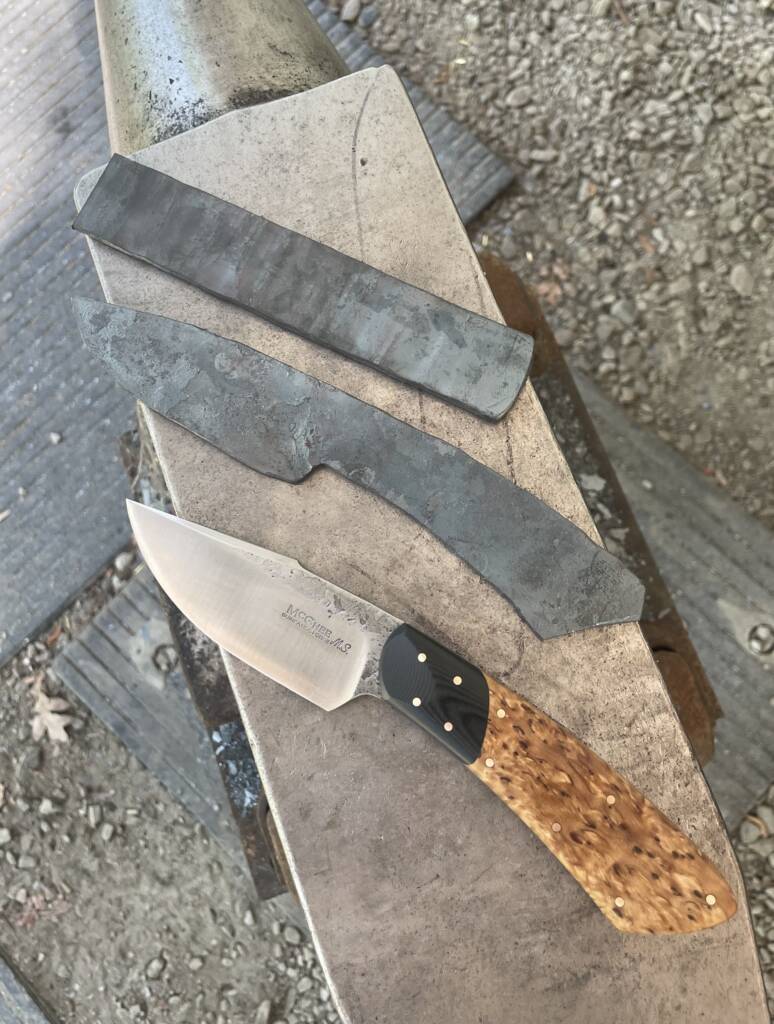
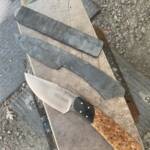
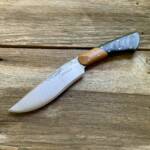
Join ABS Master Blacksmith, Scott McGhee, in this class to make a hunting knife. In this 3-day class, students will create an 8.75-inch-long hunting knife with a four inch blade. Starting with a section of flat steel bar, the class will cover forging, grinding, heat treatment, handle fitment, and finishing techniques. Students will leave with a finished, full-tang blade.
This class is physically demanding, and the student is encouraged to be
familiar with blacksmithing or metalworking environment. Beginner blacksmithing
experience is recommended but not required.
Class fee $500
Material fee $50
Must bring:
Work boots/shoes. No sneakers
Long pants, no shorts
Clothing must be cotton/denim/wool, no synthetics
Comfortable safety glasses (we have extra on hand)
Hearing protection (we have extra on hand)
Notepad
Water Bottle
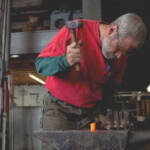
E. Scott McGhee is an ABS Master Bladesmith who lives and works in central North Carolina. Scott learned the art of blacksmithing at Penland School of Crafts at the age of 17 and has played at a coal-fired forge on and off since 1981. In August of 2009,
Scott built a gas-fired forge and began bladesmithing in earnest. He obtained American Bladesmith Society Journeyman Certification in 2012, his ABS Mastersmith Certification in 2016, and has been a full-time maker since 2014. In addition to making knives, Scott
is an ABS Master Bladesmithing Instructor and teaches knife making at various schools around the country, as well as in his home shop.